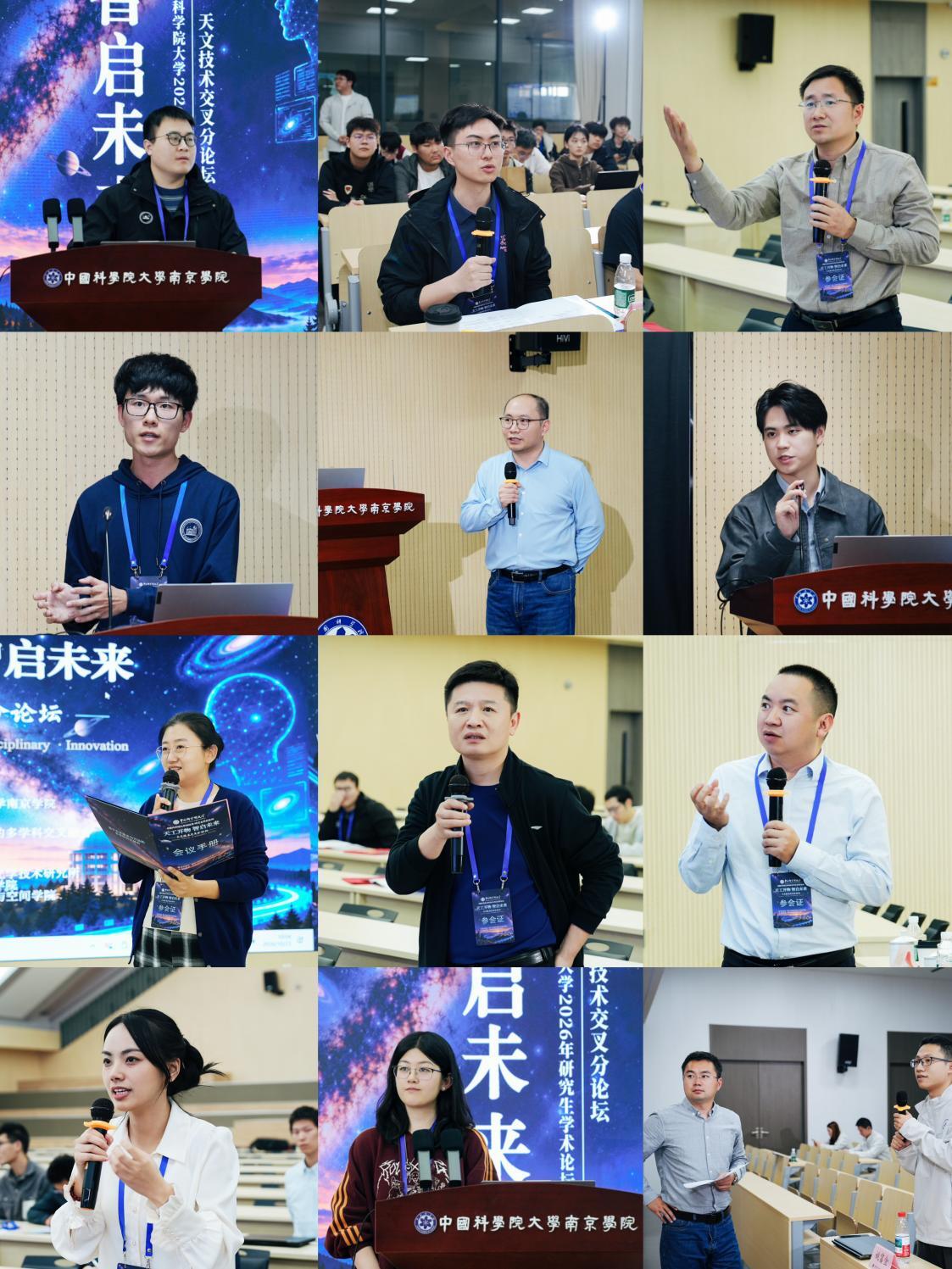
From 22 to 24 October 2026, the “Tiangong Kaiwu (Nature’s Craft) · Wisdom Inspiring the Future—Interdisciplinary Sub-forum on Astronomical Technology” of the 2026 Graduate Academic Forum of the University of Chinese Academy of Sciences was successfully held at the Nanjing College of the University of Chinese Academy of Sciences.
The forum was hosted by the University of Chinese Academy of Sciences and jointly organized by the Nanjing Institute of Astronomical Optics and Technology, Chinese Academy of Sciences, the Nanjing College of the University of Chinese Academy of Sciences, and the School of Astronomy and Space Sciences, University of Chinese Academy of Sciences, attracting more than 180 graduate students from universities and research institutes across China to attend and exchange ideas.
Centered on major research needs in astronomical observation, the forum focused on the deep interdisciplinary integration of astronomy with frontier fields such as artificial intelligence, advanced instrumentation, and precision control, promoted cross-disciplinary communication and academic exchange from the perspective of cultivating young talent, and sought to develop a future astronomical research workforce equipped with broad scientific perspectives and solid technical foundations.
The opening session of the forum was presided over by Prof. Li Zhengyang, Deputy Director of the Telescope New Technology Section, Nanjing Institute of Astronomical Optics and Technology, Chinese Academy of Sciences.
Prof. Liu Jifeng, Director of the National Astronomical Observatories, Chinese Academy of Sciences, and Dean of the School of Astronomy and Space Sciences at the University of Chinese Academy of Sciences, delivered the opening address.
He expressed warm congratulations on the successful convening of the sub-forum and encouraged young graduate students to position themselves at the multidisciplinary frontier of astronomical technology, ground their work in authentic research settings, focus on key scientific problems, conduct dedicated and enterprising research, and strive to produce high-quality, valuable, and original scientific achievements.
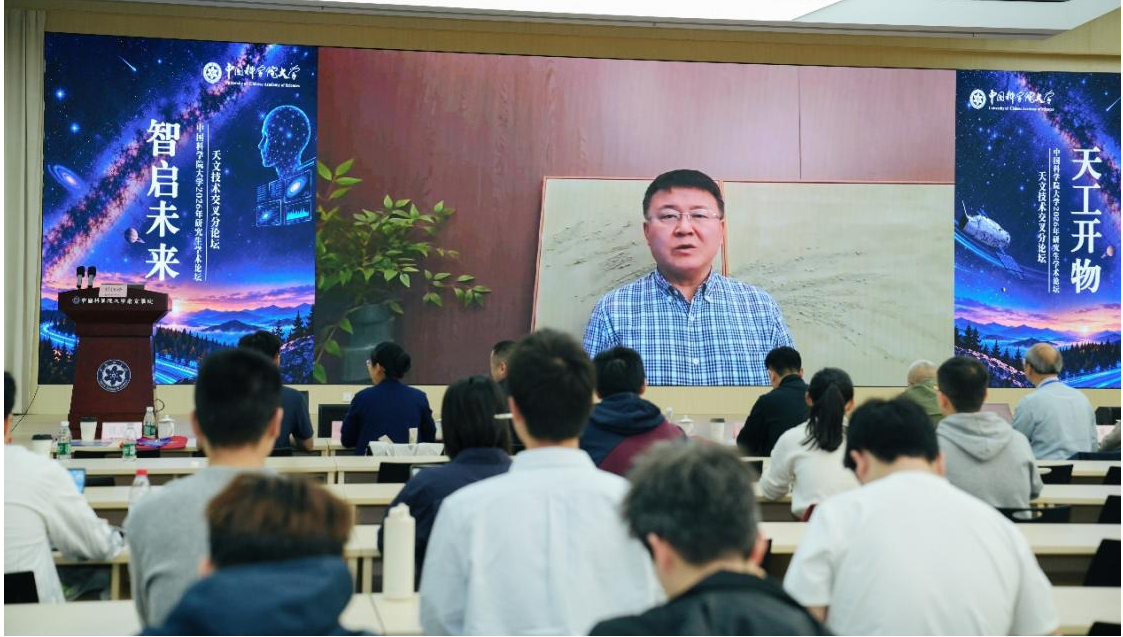
Prof. Liu Jifeng delivered the address.
Prof. Lu Youjun of the National Astronomical Observatories, Chinese Academy of Sciences, and Executive Dean of the School of Astronomy and Space Sciences at the University of Chinese Academy of Sciences, delivered the invited talk “Understanding the Universe: From the Extremely Large to the Extremely Small, and from the Extremely High to the Extremely Low,” in which he adopted a multidimensional perspective of cosmic scales, systematically reviewed frontier research achievements in astrophysics, and vividly presented the scientific appeal of the vast universe and the development prospects of the discipline.
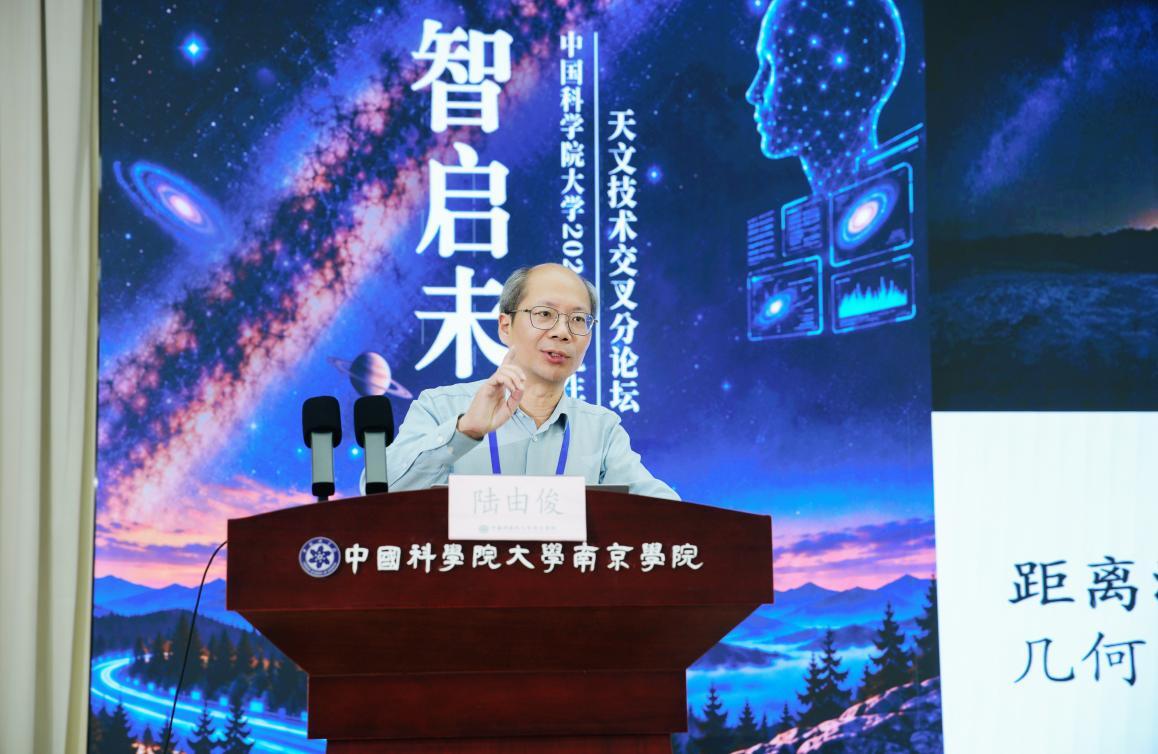
Prof.Lu Youjun delivered an invited talk.
Prof. Wang Shaojiang of the Industrial Artificial Intelligence Institute, Chinese Academy of Sciences, and Director of the Large Model Laboratory at Zhongke Nanjing Software Technology Research Institute, delivered a presentation on "Research Progress on Autonomous and Controllable Embodied Intelligence Large Models," focusing on frontier technologies in artificial intelligence large-model development and exploring the innovative opportunities and application prospects for the deep integration of autonomous and controllable intelligent technologies with the field of astronomy.
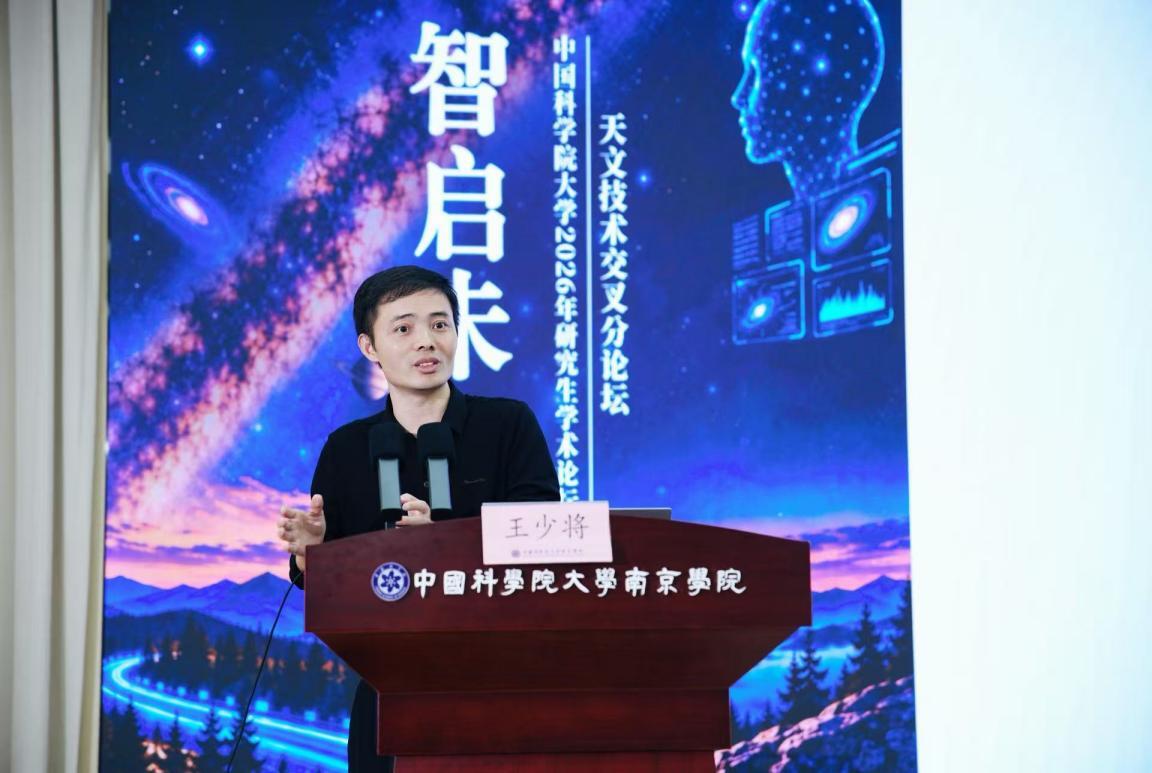
Prof. Wang Shaojiang delivered an invited talk.
Prof. Hu Zhongwen, Vice Dean of the Nanjing College of the University of Chinese Academy of Sciences and Deputy Director of the Nanjing Institute of Astronomical Optics and Technology, Chinese Academy of Sciences, delivered a talk entitled “The Development of Astronomical Optics in China,” in which he systematically reviewed the evolution of China’s astronomical optics technology from initial exploration to independent innovation, summarized key technological breakthroughs and major development milestones, and clearly presented the leapfrog development of China’s astronomical optics field.
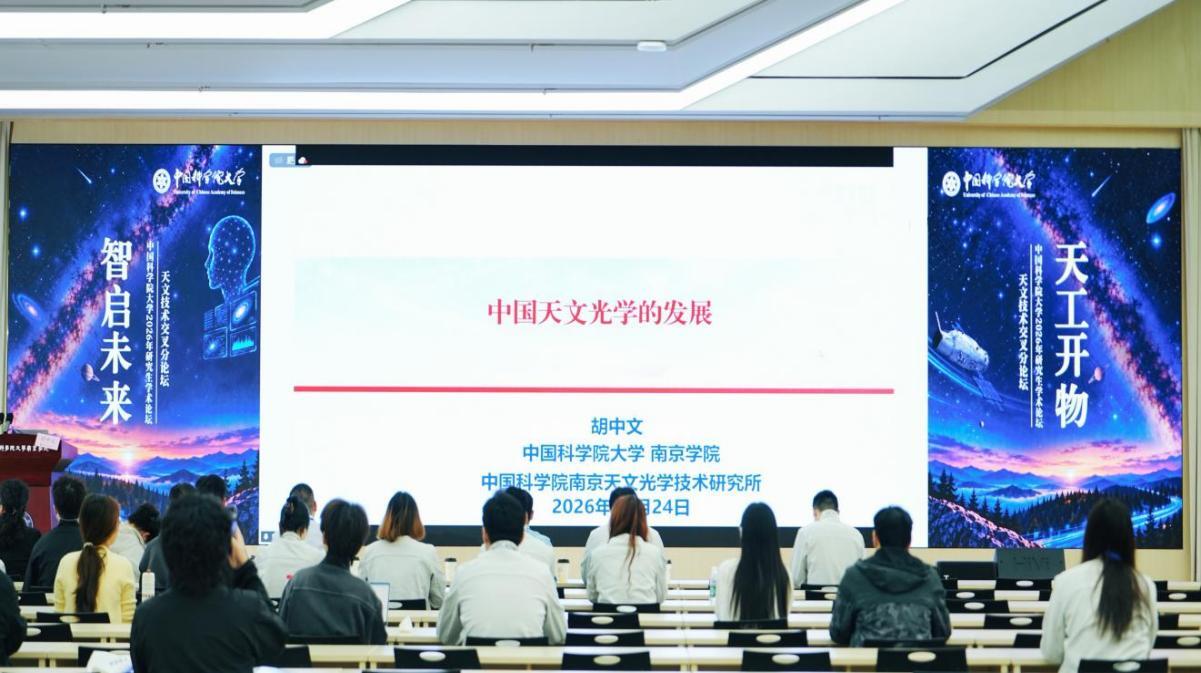
Prof. Hu Zhongwen delivered an online invited talk.
Prof. Li Zhengyang, Deputy Director of the Telescope New Technology Section at the Nanjing Institute of Astronomical Optics and Technology, Chinese Academy of Sciences, delivered a report entitled "Survey Efficiency-Driven Research on Telescope Optical Systems," in which, guided by the core requirements of astronomical survey observations, he elucidated the design concepts and optimization strategies for large-aperture, wide-field-of-view telescope optical systems.
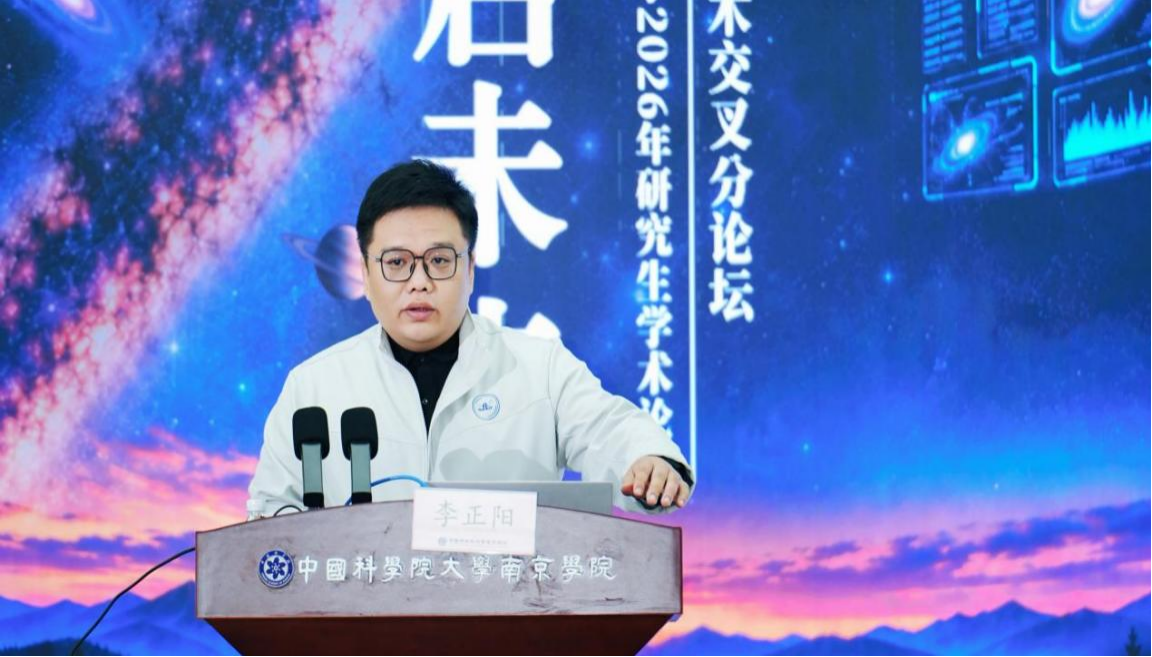
Prof. Li Zhengyang delivered an invited talk.
The series of invited talks combined intellectual vision, academic depth, and frontier breadth, covering core research areas such as astronomical optics and precision telescope technology while also incorporating emerging interdisciplinary directions such as artificial intelligence and large-scale models, thereby providing participating graduate students with a high-quality platform to engage with leading scholars, explore frontier fields, and exchange innovative ideas.
The forum issued an open call for submissions to graduate students at universities and research institutes nationwide, attracting enthusiastic submissions from more than ten institutions.
Following rigorous review and selection by the organizing committee, a total of 27 graduate students delivered oral presentations and poster sessions.
The presentations covered multiple frontier interdisciplinary research areas, including artificial intelligence and astronomical data processing, intelligent telescope control and state sensing, astronomical spectroscopy and imaging detection, and precision astronomical instrumentation and structural design.