On October 8, 2026, the medium- and low-dispersion spectrometer developed by the Nanjing Institute of Astronomical Optics and Technology, Chinese Academy of Sciences(NIAOT), successfully passed the on-site installation and adjustment acceptance, with the acceptance meeting held at the Muztagh Observatory in Aketao County, Kizilsu Kirghiz Autonomous Prefecture, Xinjiang, where the expert panel unanimously confirmed that all performance parameters of the instrument met the technical requirements and agreed to approve the on-site acceptance. Leaders from project-related units, acceptance experts, and the R&D team attended the acceptance.
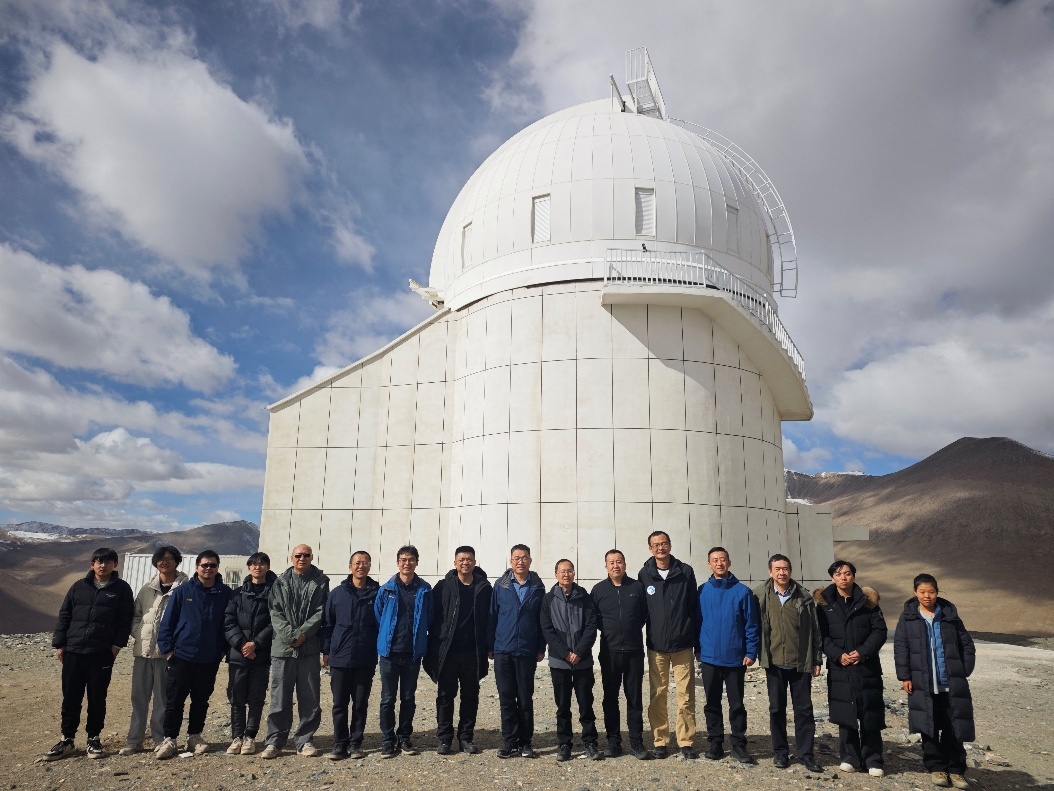
On-site group photo of the acceptance experts and project team members of the Mutian Telescope medium- and low-dispersion spectrometer.
The Mutian Telescope (MOST) is a 1.93-m optical telescope jointly established by Beijing Normal University, the Nanjing Institute of Astronomical Optics and Technology of the Chinese Academy of Sciences, the Xinjiang Astronomical Observatory of the Chinese Academy of Sciences, and Xinjiang University, and it is installed at the Muztagh Observatory in Xinjiang.
The medium- and low-dispersion spectrometer that is the subject of this acceptance is the core scientific receiver of the telescope and is installed at a folded Cassegrain focus of the telescope.
The spectrometer adopts a dual-channel architecture and can cover the ultra-wide 310–1000 nm wavelength range in a single exposure; with a 0.8-arcsecond slit, it enables full-band spectral observations in three resolution modes: R ≥ 500, R ≥ 2000, and R > 5000.
The instrument is equipped with an independent guiding system and a spectral calibration module; its slit width can be switched to accommodate different seeing conditions, and it provides remote control, unattended monitoring, and fault self-diagnosis functions.
In response to the high-altitude field operating conditions with large temperature variations at the station, the development team carried out several environmental-adaptability engineering efforts to ensure the long-term stable operation of the instrument.
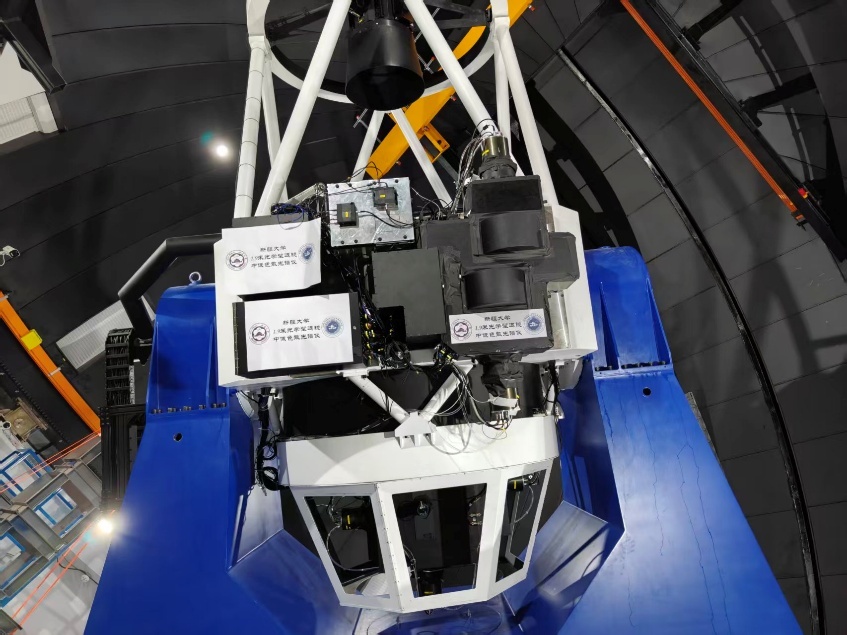
On-site inspection of the medium- and low-dispersion spectrometer of the Mutian Telescope by the expert panel
During the acceptance period, the project team completed instrument performance tests and astronomical trial observations under multiple resolution modes.
The measurements showed that all three resolution modes achieved complete coverage of the 310–1000 nm wavelength range, and both the wavelength coverage and spectral resolution exceeded the specified requirements, with the instrumental functions verified as complete.
Trial observations of multiple celestial targets enabled the successful acquisition of full-band spectra in the red and blue dual channels, fully validating the broad-band detection capability of the instrument and demonstrating the excellent ultraviolet-band observation performance of the station and the observation system.

On-site acceptance meeting of the Mutian Telescope medium- and low-dispersion spectrometer
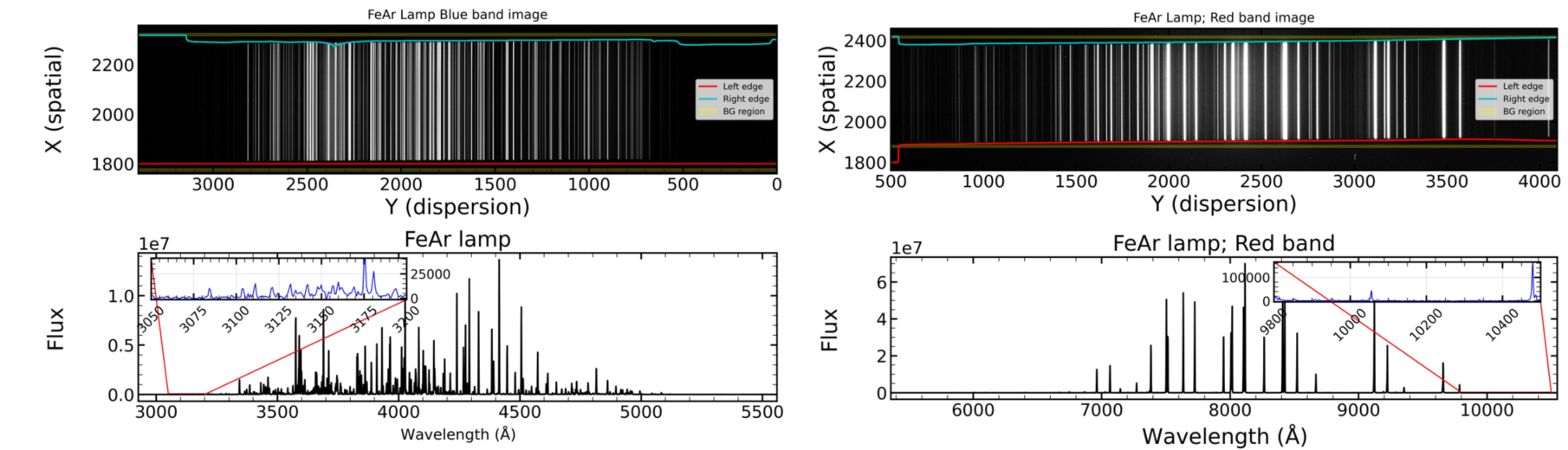
Calibration lamp spectrum test results in R2000 resolution mode
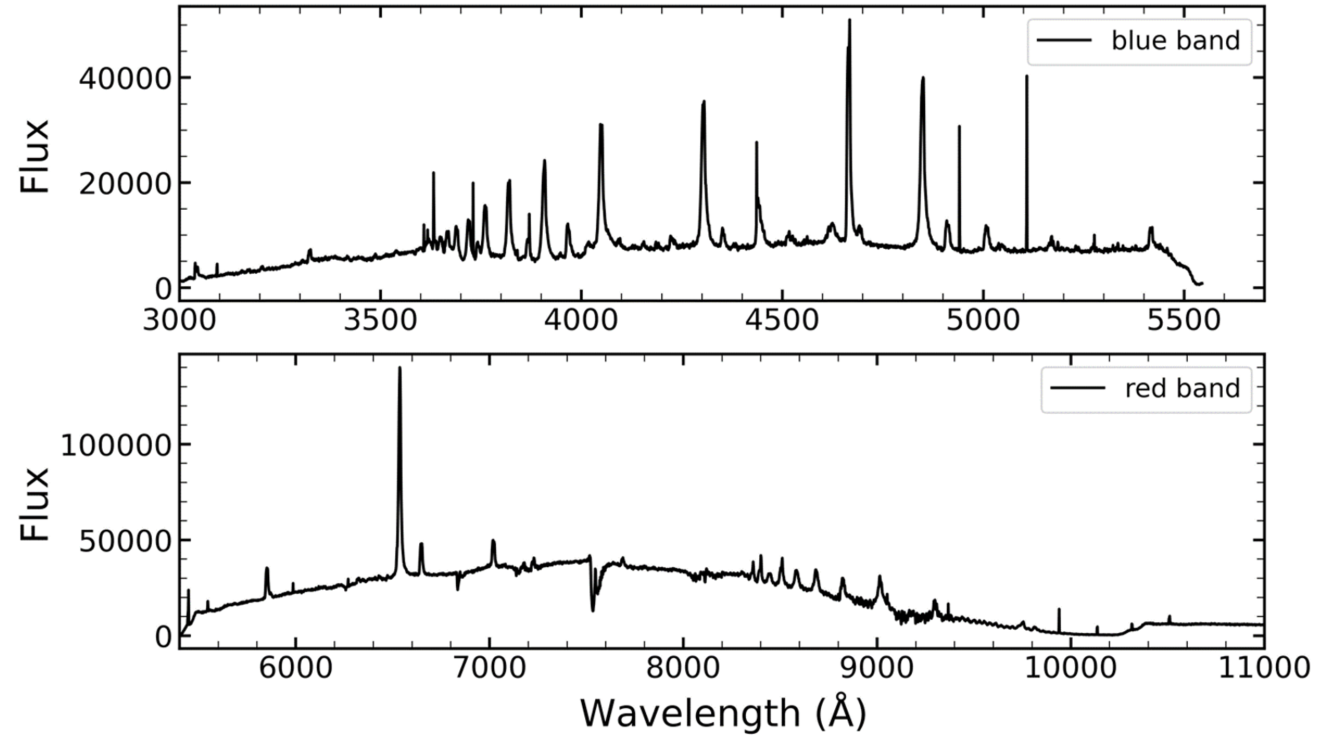
Observed spectrum of the target star AM Her obtained with the Mutian Telescope medium- and low-dispersion spectrometer (305–1060 nm)
Once operational, the spectrometer will fully leverage the observational advantages of the prime Muztagh site to support observational research in fields such as stellar physics and time-domain astronomy, provide a critical hardware platform for frontier astronomical research, discipline development, and talent cultivation at the co-establishing institutions, and contribute to achieving higher-level research outcomes in China's ground-based optical spectroscopic observations.


