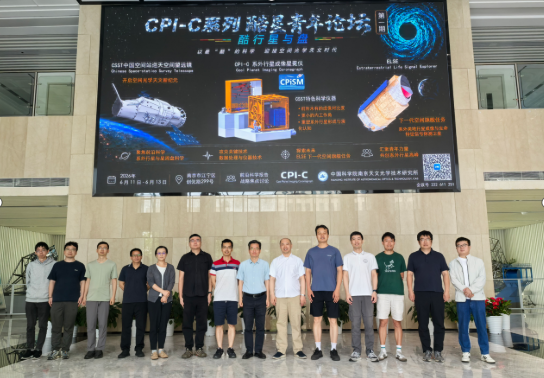
The Youth Forum was held in Nanjing on June 12–13. Hosted by the Nanjing Institute of Astronomical Optics, Technology and Astrophysics (NIAOTA), Chinese Academy of Sciences, the forum featured in-depth discussions on the latest advances in exoplanet direct imaging science and high-contrast coronagraphy technology.
More than 30 experts and scholars from universities and research institutes, including Peking University, Nanjing University, Shanghai Jiao Tong University, Sun Yat-sen University, Xiamen University, Zhejiang University, Beijing Normal University, the Instituto de Astrofísica de Canarias (IAC), the Institut de Planétologie et d'Astrophysique de Grenoble (IPAG), France, the Shanghai Astronomical Observatory of the Chinese Academy of Sciences, the Purple Mountain Observatory, and NIAOTA, participated in the discussions.
The opening ceremony was presided over with an address by Prof. Gong Xuefei, Director of NIAOTA. Gong Xuefei warmly welcomed the attending experts and noted that exoplanet direct imaging is entering an unprecedented period of development opportunities, and that the development and on-orbit operation of the Exoplanet Imaging Coronagraph (CPI-C) on the Chinese Space Station Telescope (CSST) provide a critical platform for China to achieve breakthrough scientific results in this field.
He expressed the hope that this forum would foster academic exchange in the field of high-contrast imaging in China and promote the deep integration of key technologies with fundamental scientific research.
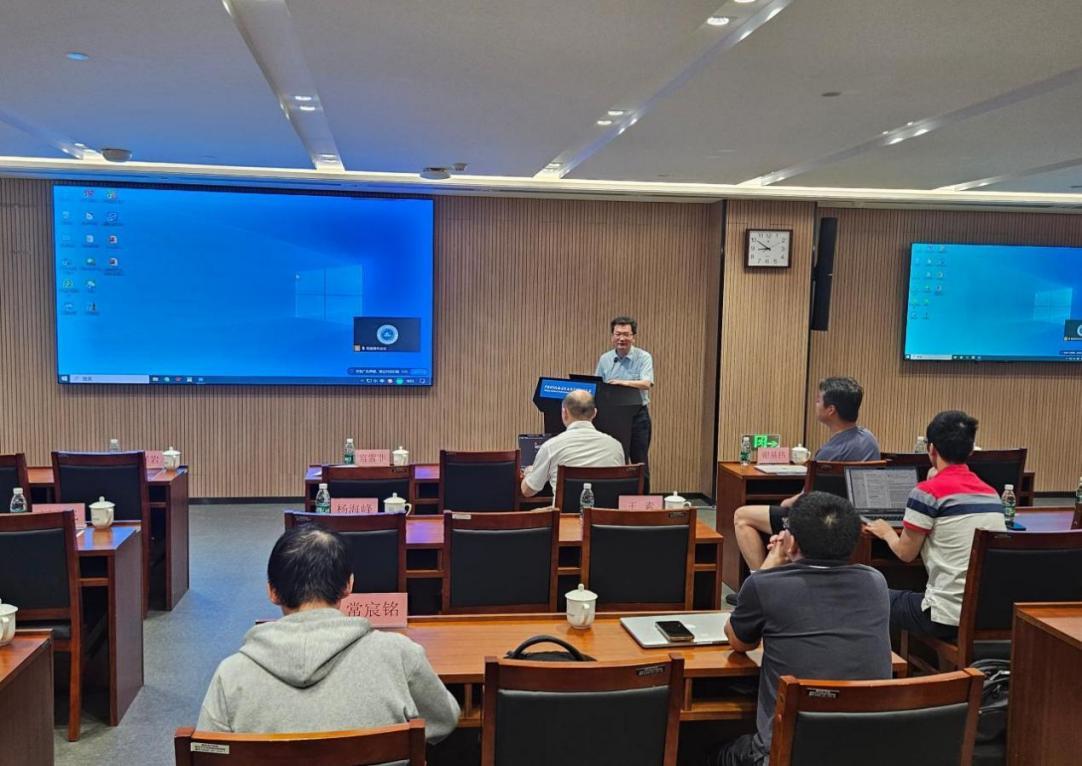
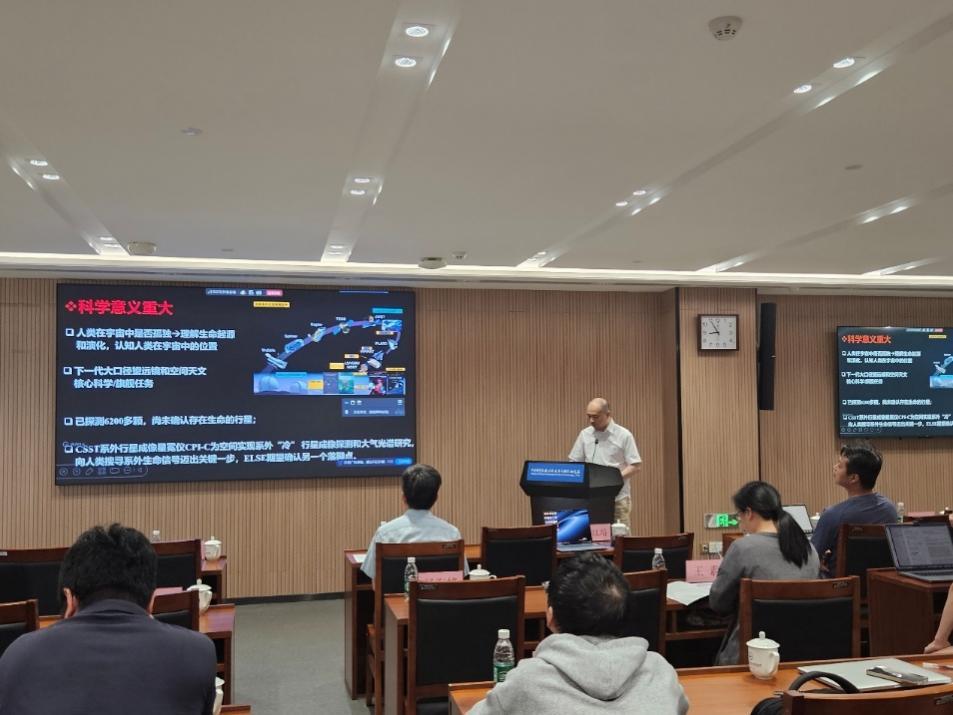
The forum featured four focused symposia centered on the latest advances in exoplanet direct imaging and coronagraphy technology. Prof. Dou Jiangpei, Chief Designer and Science Leader of the Exoplanet Imaging Coronagraph (CPI-C) on the Chinese Space Station, opened with a systematic overview of the development progress of CPI-C, its core scientific objectives, and the preliminary concept of the next-generation Exolife Signal Exploration (ELSE) project.
Session 1 focused on the core scientific questions and early science proposals of CPI-C, with in-depth discussions on CPI-C's multi-band photometric characterization capabilities, planetary atmosphere simulations, and the four-dimensional spatio-temporal evolution of planetary atmospheres.
Session 2 addressed the formation and dynamical evolution of exoplanets, with key discussions on the markedly different orbital eccentricity distributions of mini-Neptunes and super-Earths, the constraints on planet migration theories from direct imaging observations of high-eccentricity giant planets, and the degree of correlation between sub-Neptunes and cold Jupiters.
Session 3 focused on protoplanetary and debris disks, covering the formation mechanisms of cold planets during the cooling phase of protoplanetary disks, dynamical simulations of asymmetric debris disks, and new methods for detecting protoplanetary disk magnetic fields using near-infrared polarimetric observations.
Session 4 centered on high-contrast imaging techniques, post-processing algorithms, and their broader scientific applications, comparing the performance of various coronagraphic data processing algorithms, introducing the focal-plane wavefront control technology of CPI-C, discussing strategies for joint inversion of planetary orbital parameters from direct imaging and radial velocity measurements, and extending to interdisciplinary topics such as the giant planet–binary star formation boundary and the distribution of water ice in the Milky Way.

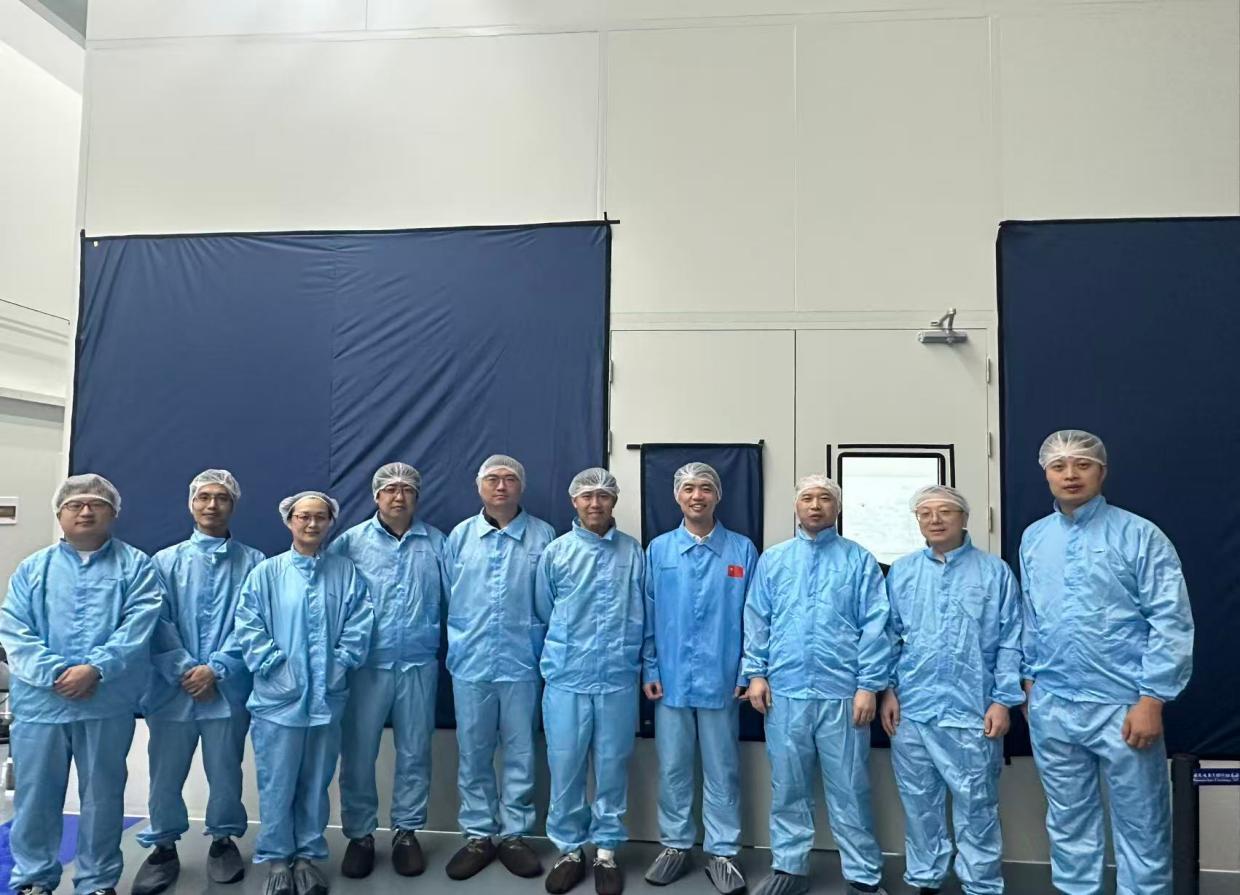
During the forum, participating experts and scholars visited the LAMOST and 14.5-meter telescope models at NIAOTA, the Exoplanet Detection Technology Laboratory of the Coronagraphy Group, the CPI-C Assembly Test Laboratory for the Chinese Space Station, and the on-site optical alignment and adjustment facilities for the CPI-C qualification unit, the ultra-high-contrast, ultra-high-precision test platform, and flight model fabrication.
Finally, in the open discussion and outlook on future collaboration session that he chaired, Dou Jiangpei stated: "Scientists and engineers working in the field of exoplanet detection bear a tremendous responsibility and a glorious mission—seeking another home for humanity. Only by striving with unwavering vigor, rolling up our sleeves, and working tirelessly can we stay the course; the search for humanity's second home is a journey that never ends."