Recently, the astrophotonics team at Nanjing Institute of Astronomical Optics & Technology, Chinese Academy of Sciences has made new progress in developing high-resolution broadband integrated photonic spectrometers for astronomical observation.
A hybrid dispersion integrated photonic spectrometer (Fig. 1) was proposed and implemented, incorporating cascaded phase-modulated waveguide array chips coupled with orthogonal dispersion modules, which achieves spectral resolutions exceeding 25,000 and an operational bandwidth over 180 nm within a compact volume approximating 500 cm³.
This marks the first-time demonstration of near-infrared solar Fraunhofer line observations using high-resolution integrated photonic spectrometers.
These findings have been published in Photonics Research (DOI: 10.1364/PRJ.582324).
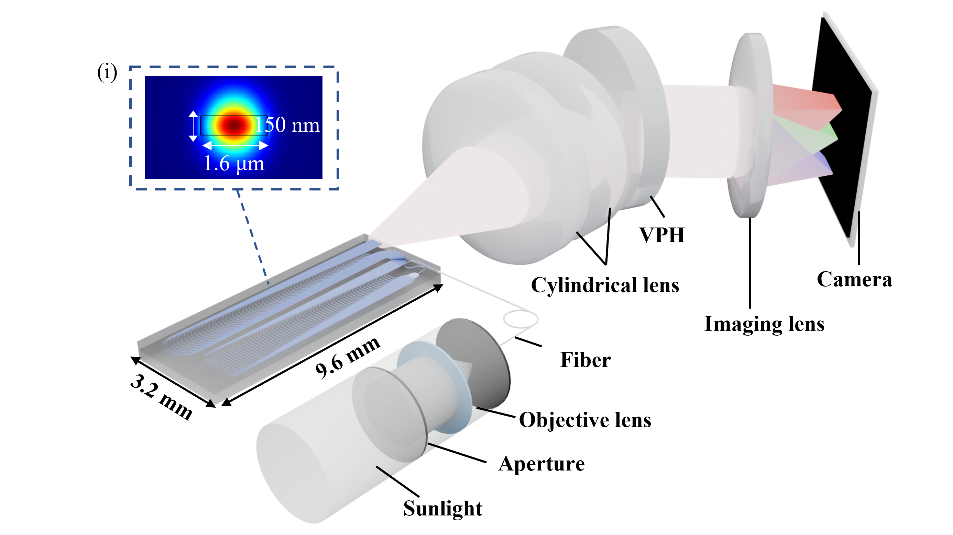
Fig. 1 Schematic diagram of the high-resolution broadband integrated chip spectrometer system
Utilizing a low-loss silicon nitride platform, the team fabricated the spectral chip with dimensions of merely 9.6 mm × 3.2 mm. Upon system integration, the complete optical assembly occupies less than 500 cm³, representing a size reduction exceeding three orders of magnitude compared to conventional meter-scale solar spectrometers.
Experimental results demonstrate that the spectral resolution of this integrated spectrometer maintained >20,000 throughout its operational range, reaching approximately 26,500 near the spectral center. The current system achieves a total spectral coverage of ~180 nm.
Bandwidth can be extended to hundreds of nanometers through optimized imaging optics and larger-format array detectors (Fig. 2).
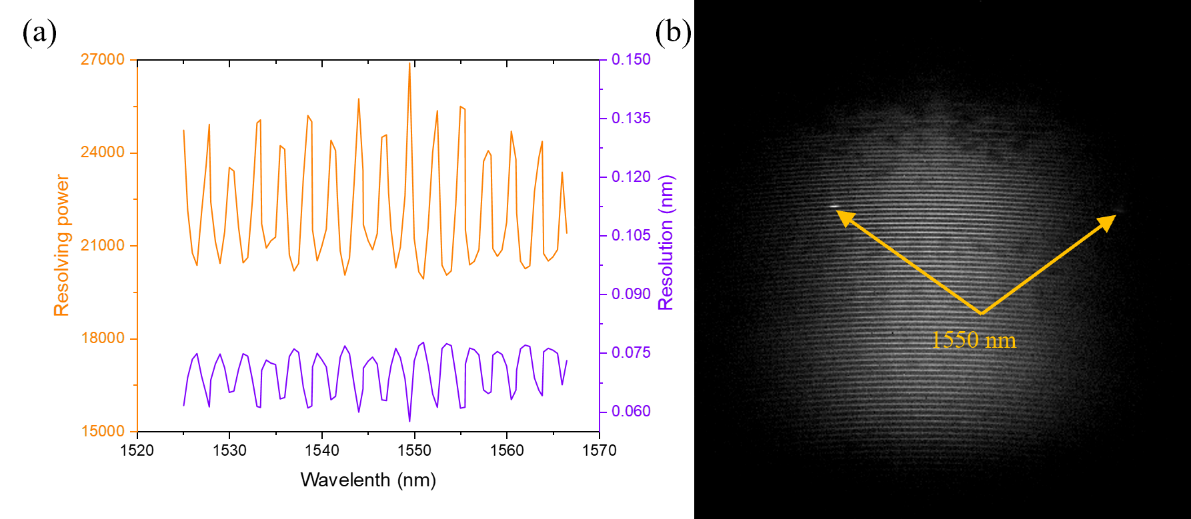
Fig. 2 Spectral resolution and measured solar spectra
For astronomical observation verification, researchers guided sunlight into the laboratory using a coelostat system, then coupled it via an objective lens into single-mode optical fiber before injection into the spectral chip (Fig. 3).
Near-infrared solar absorption spectra were successfully acquired, with clear identification of solar Fraunhofer absorption lines from FeⅠ at 1564.85 nm and 1565.29 nm, alongside adjacent H₂O absorption features (Fig. 4).
These FeⅠ lines represent magnetically sensitive near-infrared spectral lines critical for solar physics research, frequently employed in solar magnetic field inversions and Zeeman splitting diagnostics.
This demonstrates that integrated photonic spectrometers can not only perform high-resolution spectral measurements under laboratory conditions but also promise practical applications for real astronomical observation scenarios.
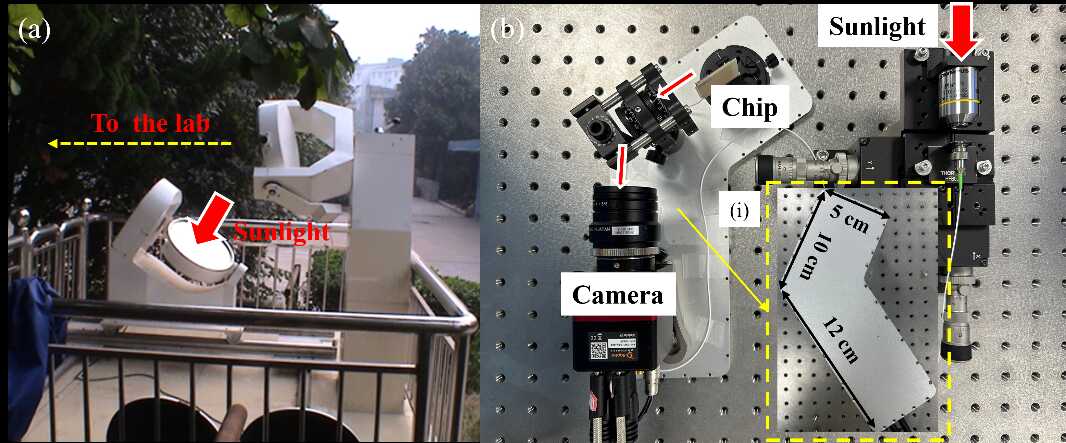
Fig. 3 Coelostat system and experimentally demonstrated integrated photonic spectrometer system
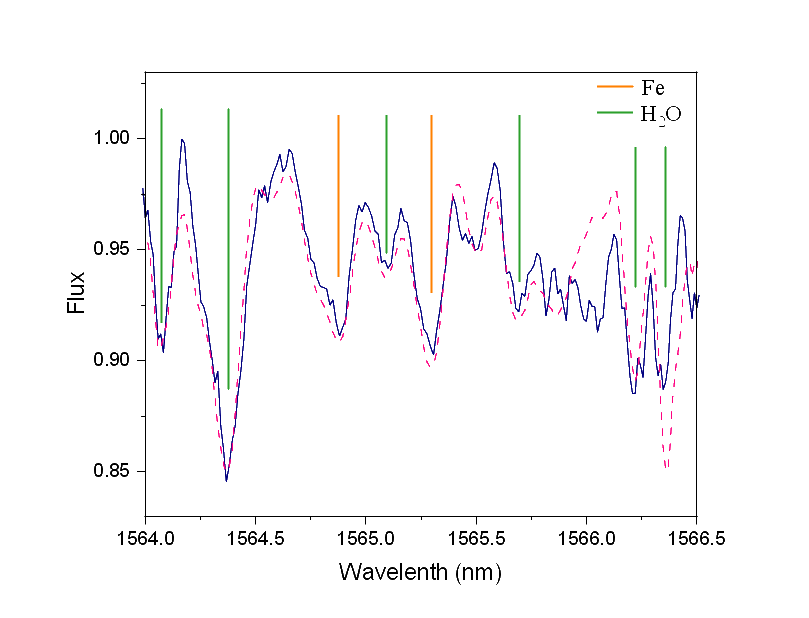
Figure 4: Solar near-infrared spectrum measured with an integrated photonic spectrometer
This study demonstrates the concurrent realization of high resolution, broad bandwidth, high precision, and compact size in an integrated photonic spectrometer.
Compared with conventional high-resolution astronomical spectrometers, this system exhibits significant advantages in terms of footprint, reproducibility, and modular expandability.
Future applications may include multi-object spectroscopic observations, integral field spectrographs, and miniaturized high-resolution spectroscopic payloads for space-based platforms.
This work was supported by the National Key Research and Development Program, National Natural Science Foundation of China, Jiangsu Provincial Key R&D Program, and related projects of the Chinese Academy of Sciences.
Article URL: https://www.researching.cn/ArticlePdf/m00072/2026/14/5/2038.pdf


