The Dome A Antarctic Observatory, located at the summit of the Antarctic ice sheet, remotely detected the first post-polar-night solar array charging gain on August 25, 2025, signifying the conclusion of the 2025 Antarctic nighttime astronomical observation season.
The AST3-2 , operational at Dome A for 12 years, resumed normal function after minimal maintenance in early 2025 following a three-year pandemic-induced hiatus of inland expeditions, and remotely acquired 3.5TB of observational data during the 2025 polar night season,comprising 1,000 hours of validated observations that included applied data on high-inclination asteroids and space objects, as well as scientific datasets on exoplanets and photometric measurements of supermassive black holes.
The AST3-2, the second-generation Antarctic Survey Telescope independently developed by the Nanjing Institute of Astronomical Optics & Technology (NIAOT), incorporates key polar optical technologies including an innovative optical system, snow-proof dynamic sealing, and low-temperature anti-frost mechanisms.
It stands as the world's largest fully steerable optical telescope deployed for autonomous operation in the Antarctic interior.
During its deployment, NIAOT dispatched a total of 17 researcher-trips to participate in China's Antarctic inland astronomical expeditions. This effort has yielded a substantial repository of Antarctic astronomical technical data.
The technological breakthroughs achieved in extreme conditions have forged a seasoned and reliable team of technical developers.
The team has ensured fully reliable unattended operation of the Dome A tracking telescope, with all components - from electronic devices to electromechanical transmission systems - maintaining stable performance.
The telescope has now completed three successful annual winter-over operations, with the most recent season setting a new record for the longest continuous observational duration.
In 2008, the Antarctic Telescope Team from NIAOT successfully developed CSTAR (Chinese Small Telescope ARray), Antarctica's first fixed-pointing array telescope. The second-generation Antarctic Survey Telescope AST3-2 represents the subsequent key observational facility in this lineage.
Following seasonal maintenance, it has now successfully conducted another overwinter observation campaign. This achievement demonstrates China's established technical capability to support large-scale optical-infrared observational facilities in Antarctica. It provides essential technological assurance for advancing Antarctic astronomical instrumentation during the 10th Five-Year Plan period.
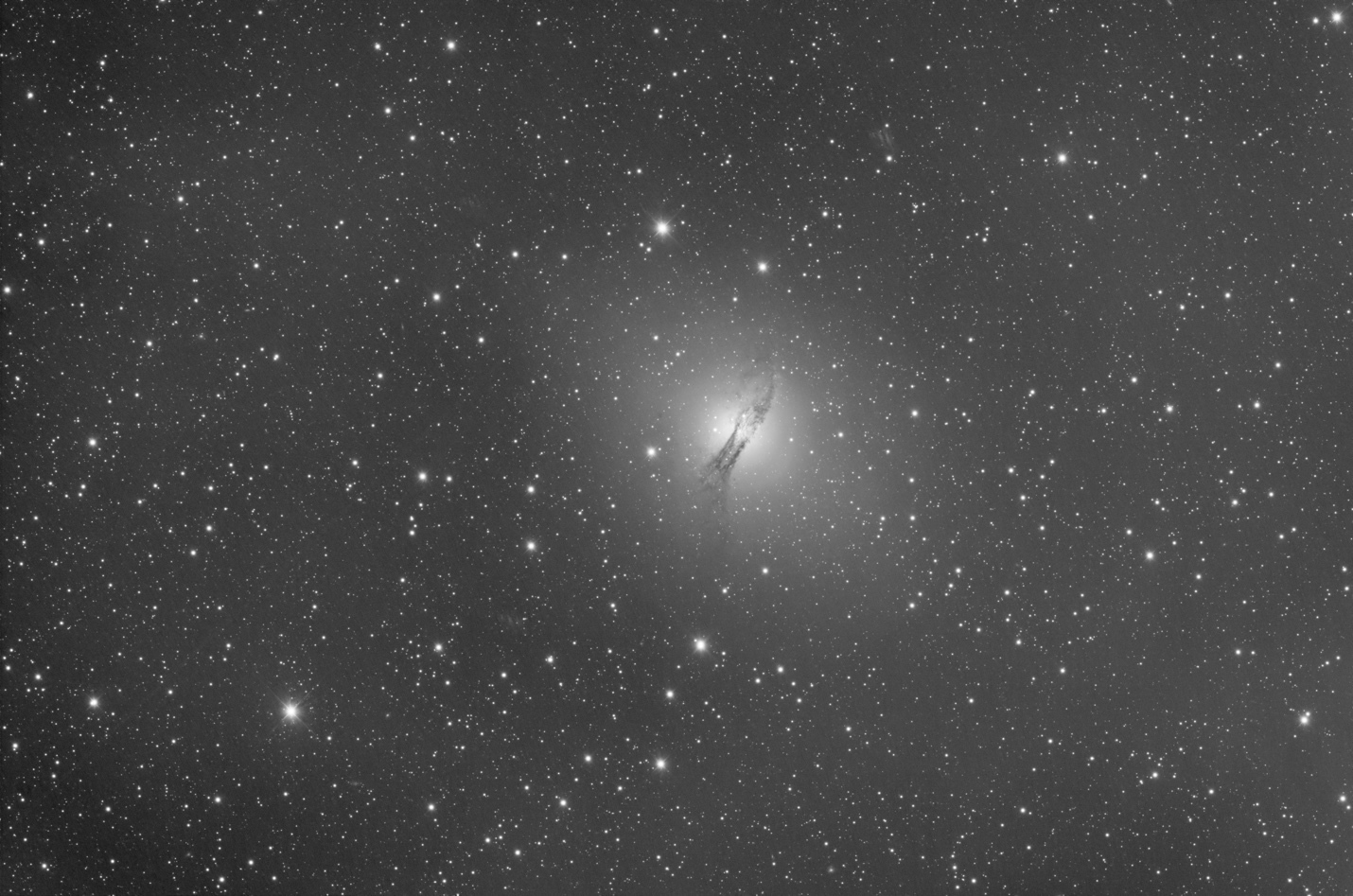
The elliptical galaxy NGC5128 captured by the AST3-2 telescope


