On November 30 to December 1, 2025, the 1.6-meter multi-channel sky survey photometric telescope ("Mengfei Sky Survey Telescope"), developed by the Nanjing Institute of Astronomical Optics & Technology (NAOC) of the Chinese Academy of Sciences for Yunnan University, successfully passed the acceptance inspection in Lijiang.
As a major scientific research platform under Yunnan University's "Double First-Class" initiative, this represents the world's first survey telescope integrating wide-field observation, large aperture, and multi-channel high-precision imaging capabilities, capable of capturing "true-color documentary" imagery of the dynamic universe.
Featuring a 1.6-meter primary mirror with a 3.14 square-degree field of view, its operational wavelength range spans 320 nm to 1050 nm, with the distinctive capability of simultaneously imaging across three spectral bands, delivering ultra-high-precision astrophysical photometry and chromatic data.
The acceptance review committee comprised experts from Shanghai Jiao Tong University, National Astronomical Observatories of CAS (NAOC), Yunnan Observatories of CAS, Purple Mountain Observatory of CAS, Nanjing Institute of Astronomical Optics & Technology of CAS, and Yunnan University.
On the afternoon of November 30, the expert panel reviewed and approved the Field Test Outline for Yunnan University's 1.6m Multi-channel Photometric Survey Telescope, establishing an on-site testing team.
That evening, the testing team conducted field tests at Lijiang Gaomeigu Observatory according to the outline, compiling a comprehensive test report.
On the morning of December 1, the panel reviewed the project summary report from NAOC's research team, the test report from the field team, and examined relevant technical documentation and archival records.
After thorough deliberation, the committee unanimously concluded that the project team had fulfilled all contractual obligations, with all specifications meeting requirements, thereby endorsing the telescope's successful acceptance.
In October 2018, the Nanjing Institute of Astronomical Optics & Technology (NAOC) entered into a cooperative research agreement with Yunnan University. The research team developed an innovative F/4.5 three-channel 2°-FOV high-precision photometric survey optical system using a large-prism dispersion design, overcoming key technical challenges including large-prism material processing, coating, bonding and structural support.
In October 2022, a small-field system (equipped with three single-chip cameras covering 42'×43') was installed at Lijiang Observatory and delivered to Yunnan University for operation; in 2023 it successfully acquired synchronized BVR-band imaging, producing the world's first true-color astronomical image which received widespread media coverage and significant academic attention.
Using data from this pilot survey, Yunnan University's Southwest Astronomy Institute has published multiple papers in top-tier astronomy journals and issued over 50 rapid alerts for transient sources.
In October 2025, the telescope's full-field optical system was installed and tested onsite, equipped with three large-format cameras featuring 2×2 mosaics of 9K×9K sensors developed by NAOC; The system successfully passed expert acceptance review on December 1, 2025, marking the commencement of true-color, wide-field observations by the "Mengfei Survey Telescope".
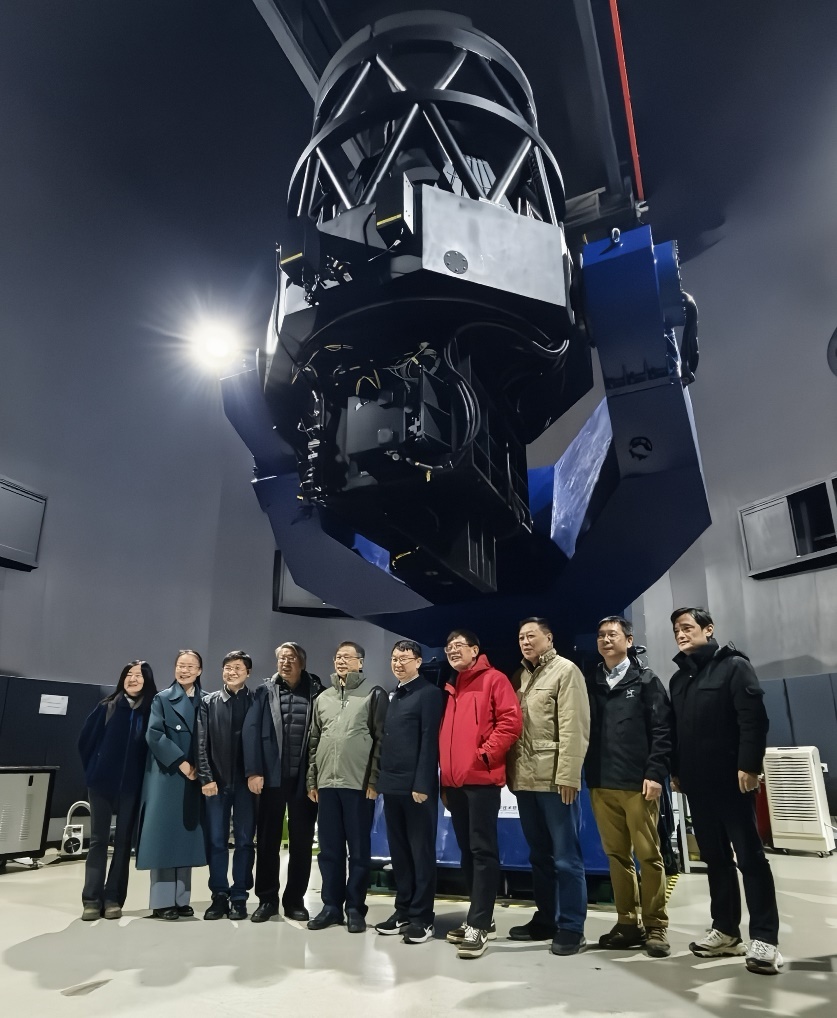
Acceptance inspection team group photo during field testing (November 30)
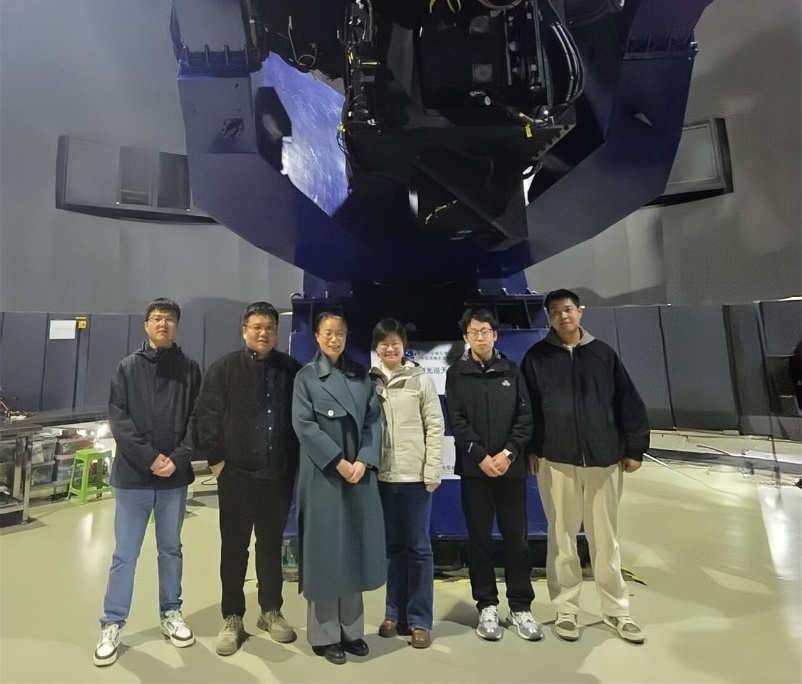
Project team members pose for a group photo during field acceptance inspection (November 30)

On-site acceptance meeting (December 1)

On-site acceptance meeting (December 1)
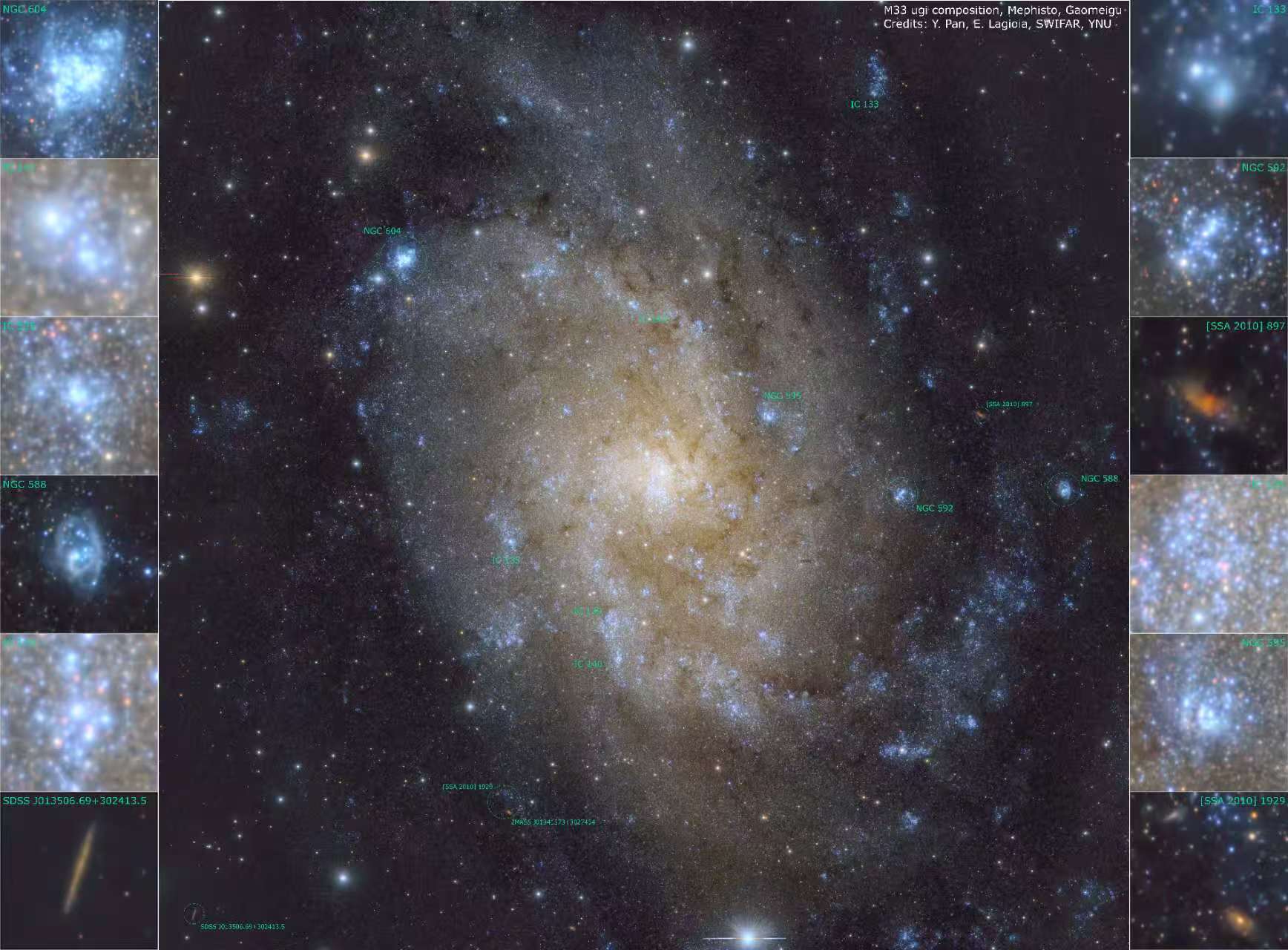
Small system observation: synthesized ugi-band image of M33 (Source: Yunnan University Southwest Astronomy Institute)
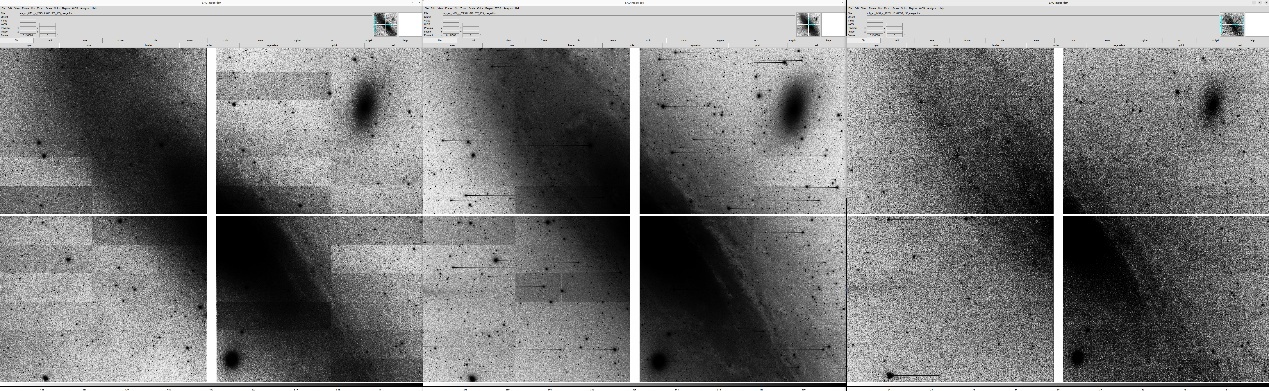
Large-system acquired three-channel (red-yellow-blue) composite image of M31 (Source: Southwest Astronomical Research Institute, Yunnan University)


